
Results of two-year pre-primary education trial published
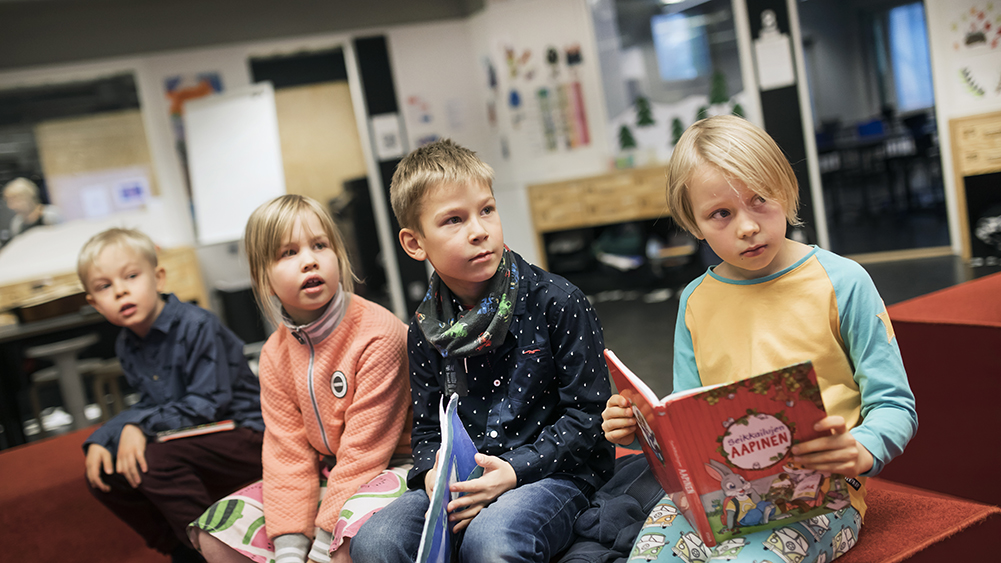
The Ministry of Education and Culture carried out a two-year pre-primary education trial in a total of 148 municipalities between 2021 and 2024. Altogether 37,357 children took part. They were placed in the trial group and control group by drawing lots. Parents, carers and teachers were satisfied with the trial and the two-year pre-primary education trial slightly increased the participation rate of five-year-olds. However, the trial did not reduce differences between children in their academic skills or socioemotional skills.
The objective of the trial was to examine the continuum between pre-primary and primary education, the service choices families make and the operating practices used in municipalities, as well as to obtain information on the effects the two-year pre-primary education had on children's development and learning potential, social skills and the formation of healthy self-esteem.
The children in the trial group were invited to start compulsory pre-primary education already at the age of five, and they attended it for two years. The control group continued in the current system. A temporary law was enacted for the trial, a core curriculum was drawn up and extensive research material was collected during of the trial.
The free trial increased the participation rate of five-year-olds in early childhood education and care or pre-primary education by 3.5 percentage points. The increase in the participation rate was explained by the free and compulsory nature of pre-primary education as well as the transportation benefit granted to families. The parents, carers and teachers mainly experienced the trial as a positive one. The amount of play, its significance and nature of the play were all the same both in the two-year pre-primary education and in the ordinary early childhood education and care provided for five-year-olds.
The children's socio-emotional skills and academic skills developed equally rapidly on average in two-year pre-primary education and in the current combination of early childhood education and care for five-year-olds including one year of pre-primary education. The two-year pre-primary education trial did not reduce differences between children in the skills assessed at the beginning of primary education. Nor did the effects vary between children from different family backgrounds.
Compared with home care, the two-year pre-primary education significantly improved the children's skills assessed at the midpoint of the trial, whereas at the beginning of primary education, these effects were no longer clearly visible. However, since the number of children who transitioned from home care to pre-primary education was small, the results are inconclusive, and possibly even more significant effects cannot be ruled out either.
The cost of implementing the two-year pre-primary education trial amounted to approximately EUR 22.2 million. These expenses were mainly accounted for by the loss of client fees and the expenses incurred for organising services due to an increase in the participation rate.
If two-year pre-primary education were to be introduced at the national level and it would increase the participation rate of five-year-olds by five percentage points, for example, and the number of five-year-olds were to remain at the current 50,000, the costs incurred for organising the services would rise by EUR 20-30 million per year. Municipalities would also lose some of the client fees for early childhood education and care.
- Final report (in Finnish)
- EDUCA Policy Brief 1/2026
Inquiries: Mervi Eskelinen, tel. +358 295 330 160