Speech by Prime Minister Petteri Orpo at the Atlantic Society of Finland seminar on 19 May 2025
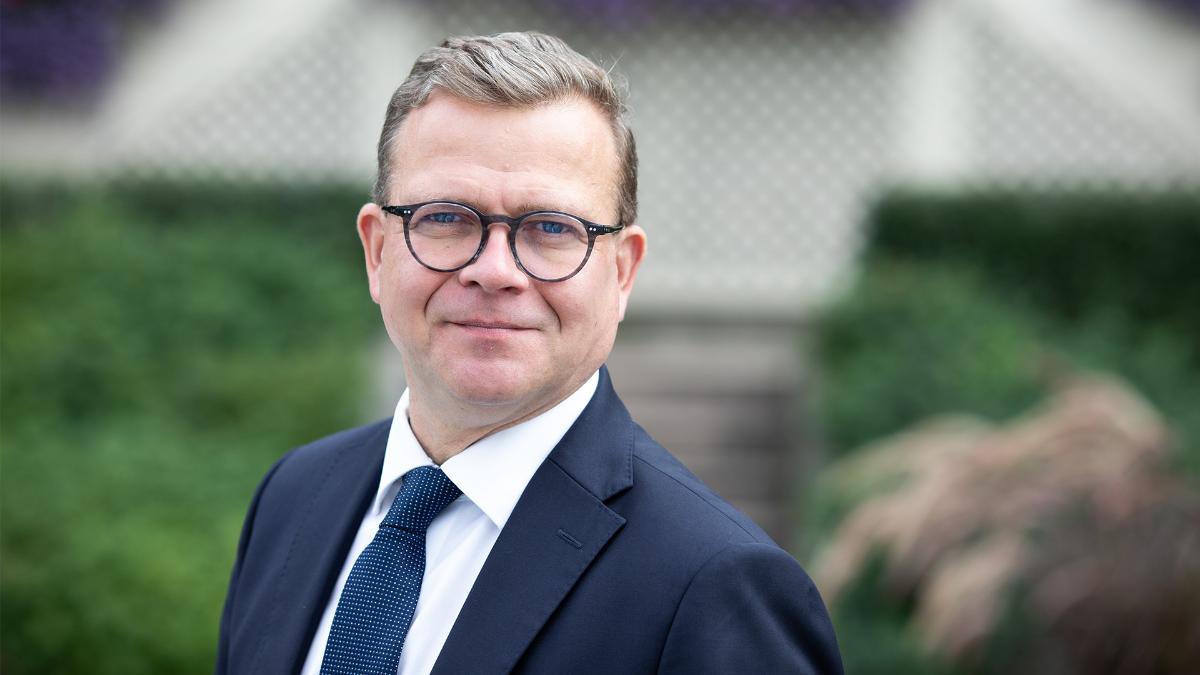
Prime Minister Petteri Orpo gave a speech at the Finland in NATO – Two Years in the Alliance event at Finlandia Hall. Speech to be checked against delivery.
Ladies and Gentlemen,
It is an honour to be here today.
Finland in NATO – two years as part of the Alliance. When I look back, it has already been quite a journey. A lot has happened. But most importantly: I don’t even want to think about a situation where we hadn’t made the decision to join.
Again, I want to thank the Finnish people for leading our way to NATO.
A saying I have heard not once or twice is that we have jumped onto a moving train, and the train is moving really fast. However, I would say that during our first two years as an Ally, Finland has integrated very well into NATO, and into its structures. We have been an active and constructive Ally from day one. This is, of course, not a coincidence – it is a result of long-term work that started in 1994, when Finland joined NATO’s Partnership for Peace.
I want to thank all of those who, at different moments in our history, have taken bold decisions that made it possible for us to join NATO so quickly and so smoothly. I want to thank you – many of whom are here today – who did this work even when it was not in fashion politically.
Ladies and Gentlemen,
Last Friday, I attended the sixth meeting of the European Political Community. The very same day, in Istanbul, negotiations were taking place that could shape the very future of Europe.
We want to see an end to the war that has been ongoing in Ukraine, in our very neighbourhood, for over three years now. I reiterate our call for an immediate ceasefire, peace talks, and a just and lasting peace.
I am happy to see how Europe is speaking now with strength and unity. We stand with Ukraine on the path towards peace and the end of Russia’s war of aggression. A sustainable peace can only be achieved when Europe is united, and when we act decisively together with the United States.
The ball is now in Russia’s court. If they do not show signs of true will to negotiate, we in the West must be ready to take stronger actions in support of Ukraine. I speak of more sanctions; I speak of more military aid.
The importance of President Trump’s personal involvement should not be ignored. He wants to achieve peace, and we do see that his efforts are leading to progress. I also want to thank President Stubb, who is working tirelessly for a just and lasting peace.
By joining NATO, Finland strengthened its own security, but also the stability and security of the whole Alliance. We have over 1300 kilometres of border with Russia, but we also have a robust national defence capability based on a conscription system, a large and well-trained reserve, and a strong will to defend our country.
When we joined NATO, we brought with us strong land forces, a large artillery, a modern air force, and a great deal of know-how on the operating conditions in the Arctic and the Baltic Sea.
Last week, we made a decision to increase our reserve. Out of a population of five million, we now have a reserve of one million.
A question I have answered many times is: Is Finland afraid? My answer is always: No, we are not afraid. We are prepared. Here, I refer to our comprehensive security model and total defence: We have maintained a whole-of-society ability to wage large-scale conventional warfare, if need be.
Of course, we have still work to do. Integration into NATO’s deterrence and defence is the most significant change that has come with NATO membership. We have relied on national defence for decades, and fully embracing the philosophy, logic and practicalities of collective defence is a big change – most of all, a cultural and mental change. We are NATO.
Our NATO membership is supplemented by our bilateral and multilateral cooperation agreements. The most significant is, of course, the Defence Cooperation Agreement we have with the United States, which allows us to deepen our cooperation in all security situations.
Ladies and Gentlemen,
Finland is implementing the biggest change in its defence policy since the Cold War, but we are not going through this change alone. NATO itself is implementing a major modernisation of collective defence. And we, as full members of the Alliance, are a part of that.
Due to our geographical location and our historical experiences as a neighbour to Russia, we view NATO topics pragmatically and with an emphasis on military logic. From the Finnish perspective, the Alliance is moving in the right direction. Of course, there is still work to be done. It is a positive challenge that we are integrating into an Alliance that is moving closer to the Finnish way of thinking when it comes to defence against Russia.
Ladies and Gentlemen,
The Hague summit will be very significant for NATO.
President Trump is pushing us, the Europeans, to take on a bigger responsibility in transatlantic burden sharing. For me, it is clear that Europe needs to take on a bigger role.
However, let me also underline that the United States’ presence and involvement will continue to be crucial in establishing credible deterrence against Russia. In this regard, I am pleased to note that the current US administration has, on many occasions, stated its strong commitment to NATO and Euro-Atlantic Security.
Ladies and Gentlemen,
Finland has already decided to increase our level of defence spending to at least three per cent of GDP by 2029. This solution will help us further strengthen Finland’s defence. It will allow the Defence Forces to take a longer-term approach so that it can immediately begin its work to modernise our land forces and strengthen our resources on a threat-informed basis.
We considered this necessary because, unfortunately, there are no signs that the security environment will become any easier in the coming years. There is no end in sight to Russia’s confrontational behaviour towards the West, in particular the EU and NATO.
Russia is likely to remain the most significant and direct threat to European and global security for the foreseeable future, and we need to be prepared for this. In this regard, time is of the essence. We see also that Russia and China are growing closer.
I have been calling on my European colleagues to respond to this challenge. And we have seen progress. Not only are we speaking with a clear and unified voice, but we’ve seen bold and timely actions by the Commission – the White Paper on European Defence and ReArm Europe are great examples of this.
Europe needs to have a clear vision. We have to be less dependent and more independent in our defence.
In five years, we must be ready to defend ourselves.
To succeed, we need a strong and diverse defence industry, supported by major investments. We need to prioritise spending and ensure that in the future, the EU budget also contributes more to overall security and defence, including military mobility.
We need to deregulate, also in the field of defence and security.
At the same time, we need to keep working to create a shared understanding in Europe of what and where the most acute threat is.
This way – and only this way – we can be sure we will have a stronger Europe, more prosperity and more wellbeing in our countries. Our goal is to be so strong that no one would ever even think of attacking us.
Because we still hear people asking who will be next. We have to be so strong that no one will be next.
Ladies and Gentlemen,
Let me finish with a message I have been repeating over and over during my time as Prime Minister.
Russia clearly seems to think it can gain success through violence and brutality, but Ukraine keeps proving them wrong. In doing so, Ukraine is protecting both its own independence and the broader European security architecture that Putin seeks to dismantle. This highlights the need for continued, unwavering support for Ukraine, as it is crucial for European, Euro-Atlantic and global security.