
Provisional application of EU–Mercosur agreement to begin: immediate tariff reductions available for companies
The EU–Mercosur trade agreement will be applied provisionally from 1 May 2026. Tariff reductions under the agreement will take effect gradually, and tariffs on certain products will be eliminated as of day one. For most products, tariffs will be eliminated over a transition period, the first stage of reductions taking place at the beginning of May.
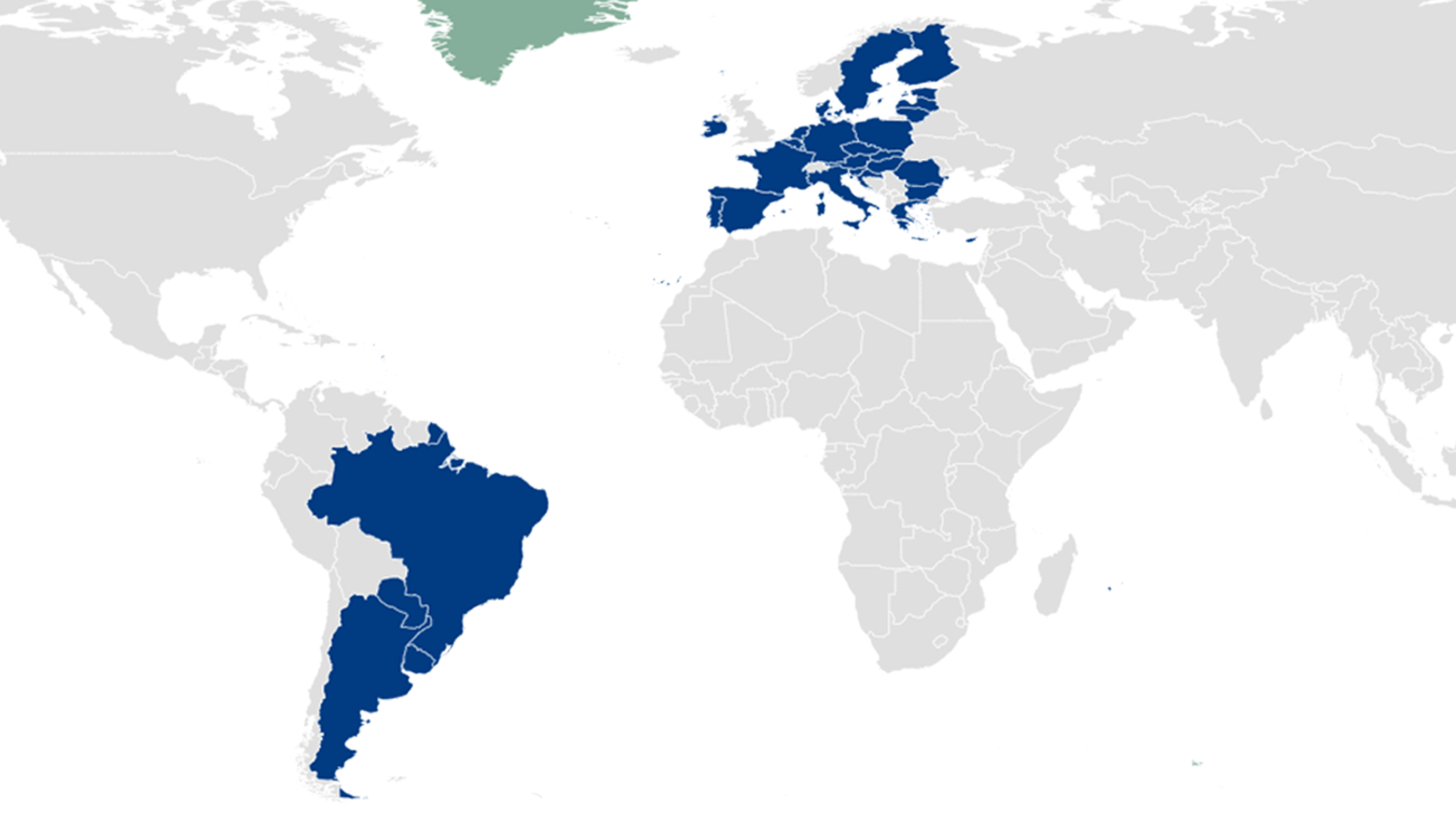
At the beginning of January, the Council of the European Union approved the signing of the agreement between the EU and the Mercosur countries – comprising Brazil, Argentina, Paraguay and Uruguay – and the provisional application of the agreement as soon as it has been ratified by at least one Mercosur country. As the European Commission and all Mercosur countries completed the required procedures in March, the provisional application between all parties will begin on 1 May 2026.
A package of two agreements
The Mercosur deal comprises two legally distinct agreements: the Interim Trade Agreement (ITA) and the broader EU–Mercosur Partnership Agreement (EMPA). The ITA covers provisions on trade and investment liberalisation. The EMPA covers the same content as the ITA but also includes a pillar on political dialogue and cooperation. The provisional application scheduled to begin at the beginning of May is limited to the ITA. The aim is to deliver the economic benefits of the negotiated trade commitments already before the entry into force of the full agreement package. The ITA will expire when the EMPA enters into force in due course.
In practice, provisional application will have the same legal effect as entry into force. This means that the ITA will apply as if it were in force, and a gradual tariff reduction will begin in accordance with the agreement.
Tariffs to be reduced gradually on most products
In the agreement, the EU and the Mercosur countries define tariff treatment for more than 10,000 CN codes. Mercosur will eliminate the tariffs on one-tenth of these codes immediately once the provisional application begins. Tariffs on most products will be reduced in equal stages within a transition period of 0 to 15 years in accordance with the table below. In such cases, the first reduction will take place at the beginning of May. Category 15V in the table, for which tariffs will not be reduced until the seventh year, applies to ten codes in group CN 87 Vehicles other than railway or tramway rolling stock, and parts and accessories thereof. Goods that are exempt from tariff reduction (staging category E) account for 8.9 per cent of the CN codes.
Category |
Year 0 |
Year 1 |
Year 2 |
Year 3 |
Year 4 |
Year 5 |
Year 6 |
Year 7 |
Year 8 |
Year 9 |
Year 10 |
Year 11 |
Year 12 |
Year 13 |
Year 14 |
Year 15 |
|---|---|---|---|---|---|---|---|---|---|---|---|---|---|---|---|---|
0 |
100% |
|||||||||||||||
4 |
20% |
40% |
60% |
80% |
100% |
|||||||||||
7 |
12.5% |
25% |
37.5% |
50% |
62.5% |
75% |
87.5% |
100% |
||||||||
8 |
11.1% |
22.2% |
33.3% |
44.4% |
55.6% |
66.7% |
77.8% |
88.9% |
100% |
|||||||
10 |
9.1% |
18.2% |
27.3% |
36.4% |
45.5% |
54.6% |
63.6% |
72.7% |
81.8% |
90.9% |
100% |
|||||
15 |
6.3% |
12.5% |
18.8% |
25% |
31.3% |
37.5% |
43.8% |
50% |
56.3% |
62.5% |
68.8% |
75.0% |
81.3% |
87.5% |
93.8% |
100% |
15V |
0% |
0% |
0% |
0% |
0% |
0% |
0% |
19% |
38.1% |
57.1% |
64.3% |
71.4% |
78.6% |
85.7% |
92.9% |
100% |
Impacts on exports of Finnish products
Most tariffs in key sectors for Finnish exports to Mercosur will be eliminated within a decade. For example, tariffs on 90 per cent of the goods in the largest group of Finnish exports to Mercosur – CN 84 Nuclear reactors, boilers, machinery and mechanical appliances, parts thereof – will be eliminated within ten years. This means that after five years, tariffs will have dropped by half from where they are now.
Looking at Finland’s current exports, the base rate in all Mercosur countries is already zero for most products whose tariffs will be eliminated at the beginning of May. However, the potential to expand exports will increase as tariffs, some of them high, are eliminated for several categories. The table below shows the proportions of staging categories for the ten largest groups of Finnish exports to Mercosur countries (Customs; Appendix 2-A-2 to the agreement).
Goods code (CN) |
Exports (€) |
Staging category |
||||||
|---|---|---|---|---|---|---|---|---|
0 |
4 |
8 |
10 |
15 |
15V |
E |
||
84 - Nuclear reactors, boilers, machinery and mechanical appliances |
245 488 567 |
17.3% |
1.4% |
0.5% |
52.2% |
23.4% |
- |
5.3% |
90 - Optical, photographic, cinematographic, measuring, checking, precision, medical or surgical instruments and apparatus |
75 469 962 |
22.8% |
3.3% |
- |
48.9% |
16.8% |
- |
8.2% |
48 - Paper and paperboard |
56 940 918 |
- |
4.0% |
- |
28.2% |
25.4% |
- |
42.4% |
85 - Electrical machinery and equipment and parts thereof |
46 898 676 |
13.6% |
6.0% |
1.8% |
58.6% |
13.8% |
- |
6.3% |
31 - Fertilisers |
46 502 721 |
51.4% |
18.9% |
13.5% |
13.5% |
- |
- |
2.7% |
87 - Vehicles other than railway or tramway rolling stock |
43 002 047 |
5.0% |
- |
1.4% |
28.4% |
36.2% |
7.1% |
21.3% |
39 - Plastics |
19 646 581 |
1.3% |
27.5% |
0.3% |
54.2% |
2.0% |
- |
14.7% |
30 - Pharmaceutical products |
17 055 099 |
18.3% |
14.9% |
21.4% |
44.1% |
- |
- |
1.3% |
72 - Iron or steel |
9 609 551 |
3.3% |
10.4% |
5.7% |
74.1% |
0.9% |
- |
5.7% |
38 - Miscellaneous chemical products |
8 723 498 |
0.4% |
19.8% |
1.6% |
71.6% |
4.9% |
- |
1.6% |
Total |
569 337 620 |
|
||||||
Finland’s total exports of goods to the Mercosur countries in 2025 |
615 185 544 |
|
Find out product-specific schedules
The product-specific tariff elimination schedule can be found in Appendix 2-A-2 to the agreement or by using the Commission’s Access2Markets portal. The portal features My Trade Assistant for Goods search engine, which allows users to enter the product code, export country and destination country to obtain a summary of the tariff elimination schedule. For more information on how to interpret the tariff elimination schedules of EU trade agreements, see also the guidance of the Ministry for Foreign Affairs.
The Mercosur agreements (the ITA and the EMPA) will require the consent of the European Parliament to fully enter into force. Despite the provisional application of the ITA, Parliament thus retains the ultimate decision-making power. It is also relevant that the European Parliament has decided to request an opinion from the Court of Justice of the European Union on the agreement's compatibility with the EU Treaties. It may take up to two years for the court to give its opinion. In addition to Parliament's consent, the EMPA requires ratification by all EU Member States in accordance with their national procedures to come into force. By contrast, the ITA only contains provisions that fall within the EU’s competence and will not therefore be submitted to national parliaments for ratification.